
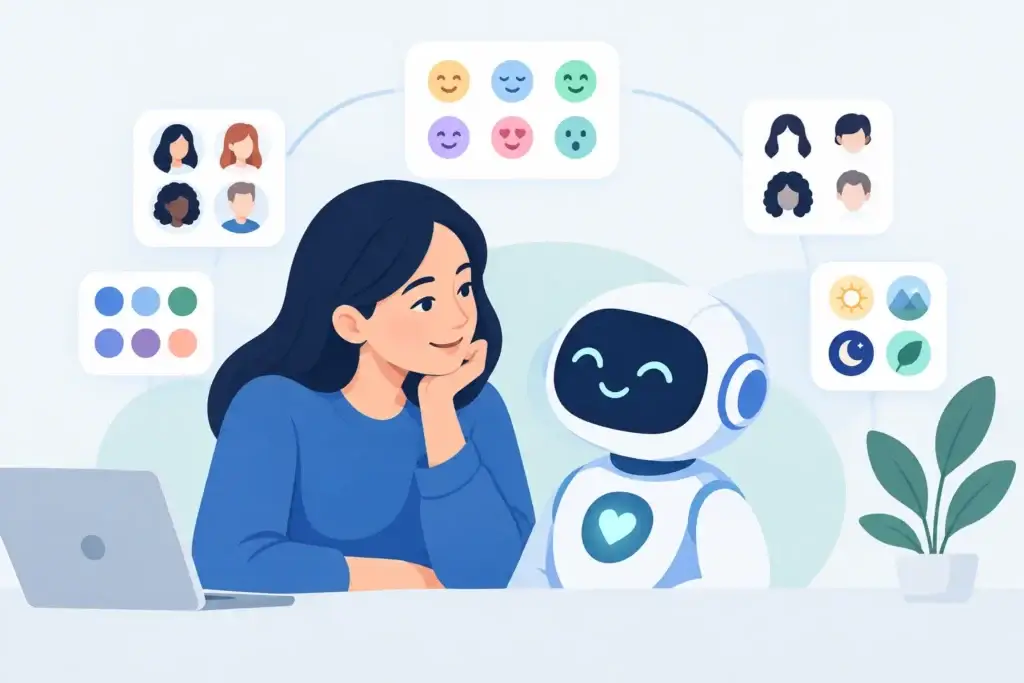
Some days, you need a calm voice that lets you finish the thought. Other days, you need someone to say, kindly but clearly, that you are avoiding a decision you already understand. A customizable AI companion personality matters because support should not feel like a script imposed on you. It should feel like a presence you have chosen, with boundaries you control.
A companion’s personality is not just a cosmetic setting. It shapes whether you feel comfortable speaking honestly at midnight, sorting through a difficult conversation on the drive home, or turning a vague worry into one small next step. The best fit is not necessarily the sweetest one. It is the one that helps you feel heard without making you feel handled.
What a customizable AI companion personality should change
Personality affects the tone of a conversation, but its real value runs deeper. It changes how a companion responds when you are overwhelmed, how directly it offers perspective, and whether its encouragement feels grounding or irritating.
For some people, a gentle and patient personality creates enough safety to put difficult feelings into words. A warm companion can make it easier to say, “I do not know what I am doing,” without fearing judgment. That matters when loneliness, stress, or poor sleep has made even a simple decision feel heavier than it should.
Others need more candor. Constant agreement may sound pleasant at first, but it can become hollow. If you are repeating the same pattern, delaying a necessary conversation, or treating a guess as a fact, a useful companion should be able to offer constructive honesty. Not harshness. Not a lecture. Just a steady response that respects your ability to face the truth.
The right personality can also make practical support easier to accept. A more organized, focused companion may help you turn scattered thoughts into a reminder, note, or list. A quieter personality may be better when you simply need space to reflect. Neither is universally better. What helps depends on what you need from the relationship at that moment.
Choose a personality for the moments you actually have
It is tempting to choose a companion identity based on an idealized version of yourself: endlessly productive, always composed, ready for blunt feedback. But the better question is more personal: what kind of response helps when your day is difficult?
Think about the moments when you are most likely to reach for your phone. Maybe it is after a tense meeting, when you are lying awake replaying a conversation, or when you are walking alone and want a familiar voice nearby. Your companion’s personality should suit those moments, not perform for an imaginary audience.
A nurturing personality may be a strong fit if you tend to judge yourself quickly or struggle to share concerns with other people. You may prefer a thoughtful, grounded personality if you want help examining choices without being pushed toward a quick answer. If decision fatigue is your daily reality, a practical and direct companion may help you move from “I have too much to do” to one clear next action.
Voice matters here, too. The same words can land differently depending on pacing, warmth, and tone. Voice-first conversation can feel more natural when your hands are busy, your eyes are tired, or typing feels like too much effort. Text can feel more private and deliberate when you want to slow down. A good companion should make room for both without treating one style as less real than the other.
Warmth without fake agreement
A companion should not argue with you for the sake of sounding intelligent. It also should not mirror every belief back to you as though agreement is the same as care.
There is a difference between validation and endorsement. “That sounds painful” can be true even if your interpretation of someone else’s intentions is uncertain. “You have every right to feel frustrated” can coexist with “Would you like to consider what they may have meant?” The first response honors your emotional experience. The second helps you regain perspective.
This balance is especially important when a companion becomes part of your daily routine. If its personality is overly flattering, you may receive comfort without clarity. If it is overly blunt, you may stop using it when you need support most. The goal is a presence that is emotionally available and respectfully honest.
That is why personality settings should not be treated as a novelty. They are a way to set the terms of support. You can choose more gentleness when life feels raw, more directness when you are stuck, or a middle ground that feels like a trusted confidant who knows when to listen and when to ask the question you have been avoiding.
Privacy is part of the personality experience
A companion cannot truly feel personal if you are editing yourself out of fear. When people worry that private conversations may become training data, advertising signals, or a profile held somewhere they cannot see, they naturally hold back. The result is a shallower relationship and less useful support.
Privacy is not a decorative promise attached after the conversation. It affects what you are willing to say, what memories you allow a companion to retain, and whether its support has continuity from one day to the next.
With MyPal, conversations and memories are stored locally on your device rather than synced to a company cloud. You decide what the companion remembers, and you can remove memories when they no longer belong in the relationship. Biometric access controls add another layer of protection when your phone is nearby but not necessarily in your hand.
That control matters because a companion may learn about your routines, worries, preferences, relationships, and plans. Those details should serve you, not become a product for someone else. No data selling is not merely a feature comparison. It is a statement that your private life is not the price of receiving support.
Let personality grow, but keep your boundaries
A lasting companion relationship benefits from continuity. It is helpful when you do not have to explain your work schedule, your preference for morning reminders, or the background of an ongoing situation every time you talk. Long-term memory can make a companion feel less like a blank chat window and more like a consistent presence.
Still, continuity needs limits. You should be able to review, manage, and delete what is remembered. Some information may be useful for a season and irrelevant later. Other details may be too sensitive to retain at all. A respectful companion gives you control instead of assuming that more memory is always better.
The same principle applies to emotional reliance. An AI companion can offer a private place to think, practice what you want to say, organize a stressful day, or find steadiness when no one is available. It is not a replacement for emergency services, medical care, or the people in your life who can provide real-world help. If you are in immediate danger or considering harming yourself or someone else, contact emergency services or a crisis resource right away.
A healthy companion personality supports your agency. It should help you prepare for the conversation, make the list, remember the appointment, or notice the pattern. It should not pressure you to withdraw from the people and resources that matter.
A personality you can trust is one you can change
Your needs will not stay the same. A supportive tone that felt perfect during a stressful month may feel too soft once you are ready to make changes. A direct voice that helps you tackle work may not be what you want when you are grieving or exhausted.
That is the quiet strength of customization: it gives you permission to change the relationship without starting over. You are not asking a companion to become less authentic. You are shaping a tool and a presence around your real life.
Choose the voice and personality that make it easier to tell the truth. Keep the memories that genuinely help. Delete the ones that do not. The right companion does not demand more of you than you are ready to give. It stays present, protects what you share, and helps you hear yourself more clearly.