
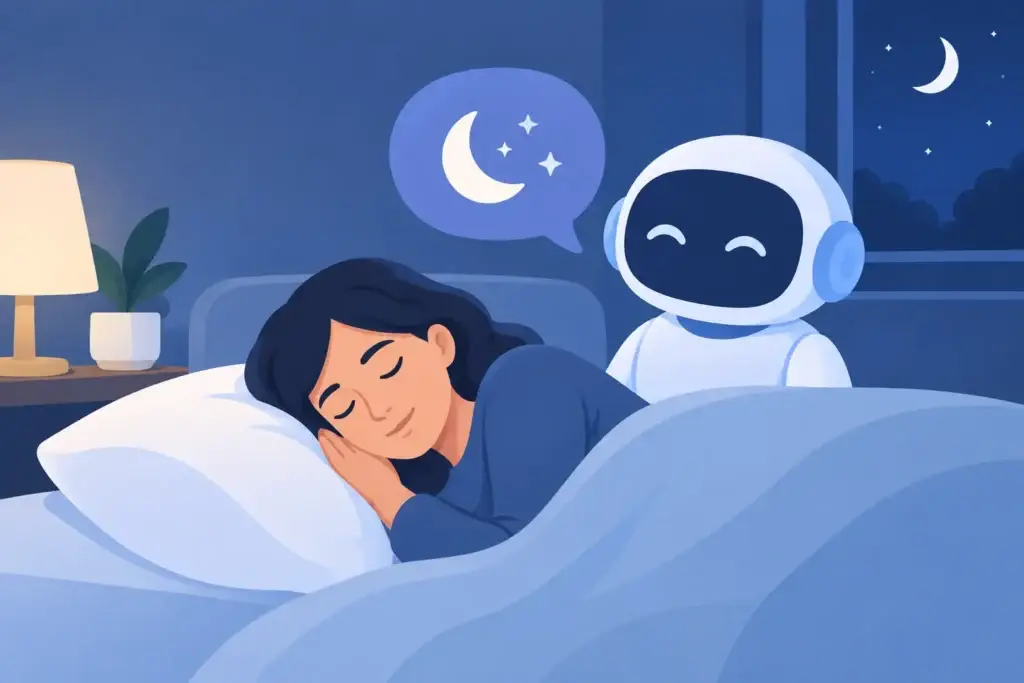
At 2:17 a.m., the problem is rarely just that you are awake. It is the unfinished conversation replaying in your head, the decision you have to make tomorrow, the strange pressure to fall asleep right now. An AI chatbot for insomnia cannot make sleep happen on command. It can, however, give those thoughts somewhere to go besides another lap around your mind.
That distinction matters. The most useful bedtime support is not about forcing relaxation or pretending every hard night has a simple fix. It is about creating a small, private pause: a place to name what is bothering you, settle on one next step for tomorrow, and stop carrying the whole day alone.
Why racing thoughts need an outlet
Many people with occasional insomnia are not short on sleep advice. They already know the basics: keep the room cool, limit late caffeine, try a consistent schedule. Those habits can help, but they do not answer the thought that arrives when the lights are off: “What if I said the wrong thing?” or “How am I going to handle all of this?”
A responsive conversation can interrupt that loop. You can say what is on your mind without waking a partner, scrolling through social media, or feeling as though you need to make your worry sound reasonable first. Sometimes the act of putting a concern into words lowers its volume. Sometimes it reveals a practical task that can wait until morning.
The goal is not to analyze yourself for an hour. It is to move from mental noise to a little more clarity, then give yourself permission to rest without solving everything.
What an AI chatbot for insomnia can actually do
A good conversational companion can support a wind-down routine in ways that feel personal rather than scripted. If you are upset after a difficult text, it can listen without rushing to cheer you up. If your mind is crowded with errands, it can help turn them into a short list for tomorrow. If you cannot identify why you feel unsettled, it can ask gentle, specific questions that make the feeling easier to name.
It can also help you create a repeatable bedtime check-in. You might spend a few minutes sharing what went well, what is still weighing on you, and what you want to set down for the night. Over time, noticing patterns can be useful. Maybe work calls late in the evening tend to follow you to bed. Maybe your sleep gets worse when an unresolved family issue is sitting in the background.
This works best when the conversation stays light enough to be calming. Bedtime is usually not the moment to open the biggest question of your life. A supportive chatbot should help you recognize that trade-off: acknowledge the issue, capture what matters, and return to it when you have more energy.
A calmer way to use your phone before bed
There is an obvious concern here. Phones can keep people awake. Bright screens, alerts, endless feeds, and emotionally charged content are not a recipe for rest. An AI chatbot is not automatically sleep-friendly just because it is called supportive.
How you use it matters. Keep the interaction brief and purposeful. Use a dim display, turn on a warm screen setting if it helps, and silence notifications that do not need your attention. Voice conversation can be especially helpful for people who do not want to stare at a screen or type out a long explanation in the dark.
Give the conversation a clear ending. You could say, “Help me put this aside until tomorrow,” then let the companion reflect back what you want to remember. After that, put the phone down. The point is not to find a more interesting reason to stay awake. It is to make the transition out of the day feel less lonely and less unfinished.
Privacy matters more at night
Nighttime thoughts are often the ones people least want turned into a profile. They can involve a relationship, money, grief, health fears, work stress, or feelings that are hard to admit even to close friends. If you are using an AI companion as a private outlet, you deserve to know where those conversations live and who can access them.
That is why privacy is not a minor settings-page detail. It shapes whether you can speak freely at all. Before sharing personal reflections, look past reassuring marketing language. Ask whether conversations are stored in the cloud, whether they may be used to improve systems, whether data is sold or shared, and whether you can delete memories yourself.
MyPal is built around a different promise: your conversations are yours alone. Its user-controlled memories are stored locally on your device, with no cloud sync and no data selling. Biometric access controls can add another layer of protection when your phone is nearby but not always in your hand. For a person who needs somewhere honest to talk at night, that control is part of the comfort.
Build a bedtime check-in that does not become another task
The best routine is one you will still use on a draining Tuesday. Keep it simple, and make it fit your actual life rather than an ideal version of it.
Start by giving yourself a few minutes to say what is present. You do not need to produce a polished journal entry. “I am tense about tomorrow,” is enough. Then ask for help separating what needs action from what needs acknowledgment. A practical worry can become one note for the morning. An emotional worry may simply need to be heard.
Next, choose one small closing thought. It could be a realistic reassurance, such as, “I do not have to decide this tonight.” It could be a reminder of what you handled today. Avoid turning this into forced positivity. If the day was painful, honesty is more calming than pretending otherwise.
Finally, end the conversation deliberately. Set a reminder if there is something you are afraid of forgetting. Make a note if that gives your brain permission to release it. Then place the phone out of reach if you can. Consistency matters more than doing the routine perfectly.
Where a chatbot is not enough
An AI companion can be a steady presence, but it is not medical care, emergency support, or a substitute for people who know you. Insomnia can also be connected to conditions that deserve professional attention, including depression, anxiety, trauma, sleep apnea, medication effects, chronic pain, and substance use.
Consider speaking with a licensed healthcare professional if sleep problems are persistent, interfere with your daily functioning, involve loud snoring or gasping, or leave you regularly exhausted despite enough time in bed. If you are feeling unsafe, at risk of harming yourself, or in immediate danger, contact emergency services or a crisis resource right away rather than relying on a chatbot.
There is also a relational boundary worth protecting. A companion can listen at any hour, but it should not encourage you to withdraw from every human connection. The healthiest use is often additive: a private place to process before you talk to a partner, friend, doctor, or therapist, or when no one else is available in that exact moment.
Let the night be smaller
You do not need a perfect sleep routine to deserve rest. Some nights will still be difficult. The value of an AI chatbot for insomnia is not that it promises to erase those nights. It offers a calm place to set down what you are carrying, with no pressure to perform and no need to explain why it feels heavy.
If you try one tonight, keep the goal modest: say the thing that is keeping you awake, save what needs tomorrow’s attention, and let the rest wait until morning.